
Introduction
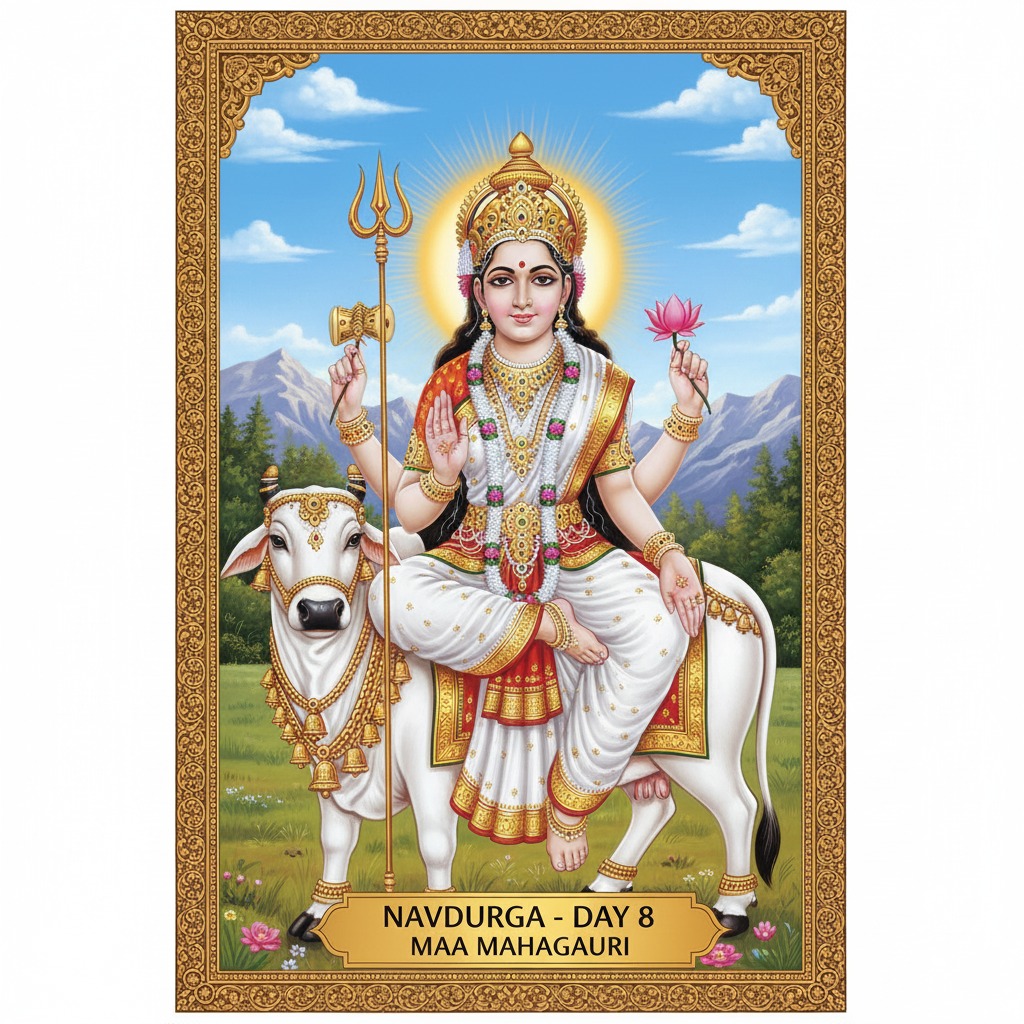
The eighth day of Navratri is dedicated to Maa Mahagauri, the radiant goddess known for her pure white complexion and serene demeanor. She rides a bull and holds a trident and a drum, while her other hands display gestures of blessing and protection. Her name means “extremely fair,” symbolizing purity and spiritual perfection.
Maa Mahagauri is believed to cleanse the sins of devotees and grant them peace, wisdom, and liberation. Her gentle form brings calmness and hope to those seeking inner transformation.
Significance of Maa Mahagauri
Maa Mahagauri represents purity, forgiveness, and spiritual enlightenment. She is associated with the Sahasrara Chakra (Crown Chakra), which governs divine connection and consciousness. Her worship helps devotees release past burdens, embrace peace, and move toward spiritual liberation.
According to mythology, after years of penance to attain Lord Shiva, Parvati’s complexion turned dark. Lord Shiva bathed her in the holy Ganga, restoring her radiant form as Mahagauri. Her story inspires people to believe in the power of transformation and divine grace.
Rituals for Day 8
- Offerings: Devotees offer coconut, sweets made with milk, and pink flowers to honor her purity.
- Mantra Chanting: “ॐ देवी महागौर्यै नमः” (Om Devi Mahagauryai Namah) is recited with devotion.
- Puja Setup: Place her idol or image on a white or pink cloth, decorate with lotus or jasmine flowers, and light ghee lamps.
- Fasting: Many continue fasting with fruits, milk, and sattvic meals.
- Meditation: Focus on the Sahasrara Chakra to invite peace and divine connection.
Blessings for Families and Children
Maa Mahagauri’s worship is said to bless families with peace, purity, and emotional healing. She inspires children to develop kindness, patience, and clarity of thought. Her energy nurtures a calm and loving home environment, free from negativity.


