What is Diwali?
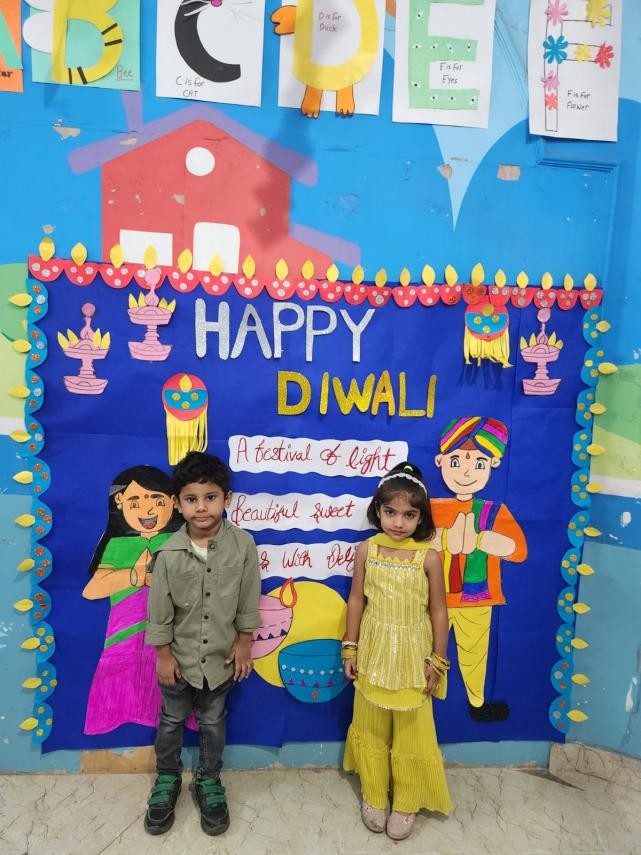
Diwali marks the victory of light over darkness, good over evil, and knowledge over ignorance. The name comes from the Sanskrit word Deepavali, meaning “row of lights”.
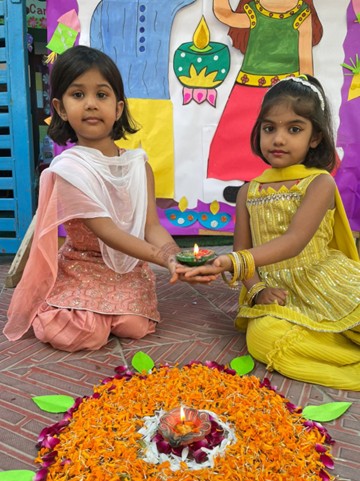
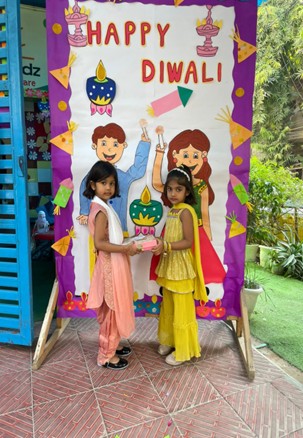
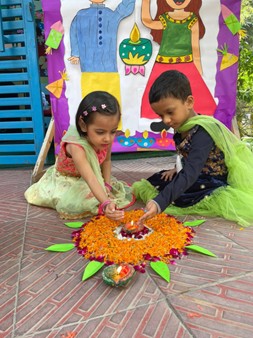
People celebrate Diwali by lighting diyas, decorating with rangoli, enjoying fireworks, sharing sweets, and spending time with loved ones.
Why it is Celebrated?
Diwali, also known as Deepavali, is one of the most important festivals in India and is celebrated by millions of Hindus, Jains, Sikhs, and some Buddhists around the world.
The reasons for celebrating Diwali vary by religion and region, but the central themes are the victory of light over darkness, good over evil, and knowledge over ignorance.
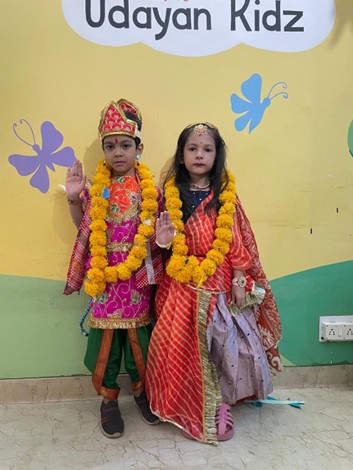
- Return of Lord Rama to Ayodhya: After 14 years of exile and defeating the demon king Ravana, Lord Rama, along with Sita and Lakshmana, returned to his kingdom. The people of Ayodhya celebrated their return by lighting rows of oil lamps (diyas), which is why the festival is called Deepavali (meaning “row of lights”).
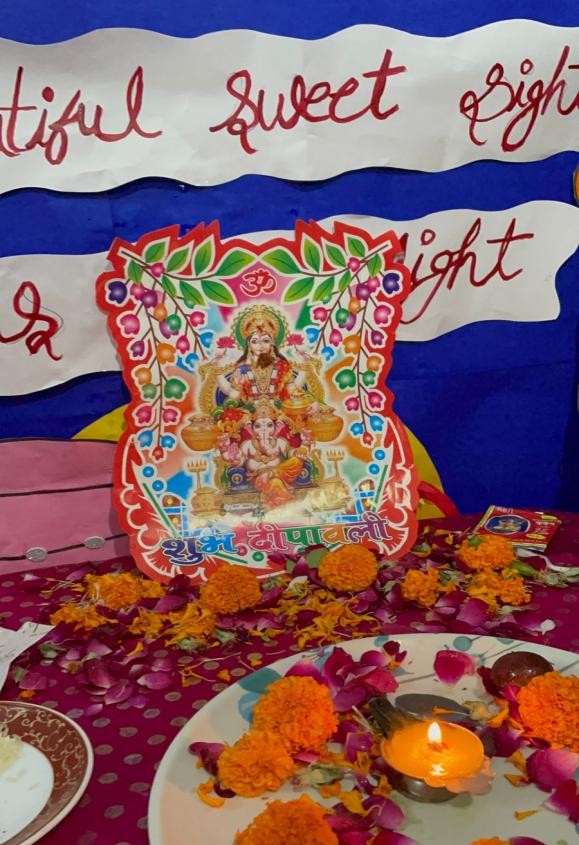
- Goddess Lakshmi’s Blessing: Diwali is also associated with Lakshmi, the goddess of wealth and prosperity. It is believed that she was born from the churning of the ocean (Samudra Manthan) on this day.
People light lamps to invite Lakshmi into their homes for wealth and success in the coming year.
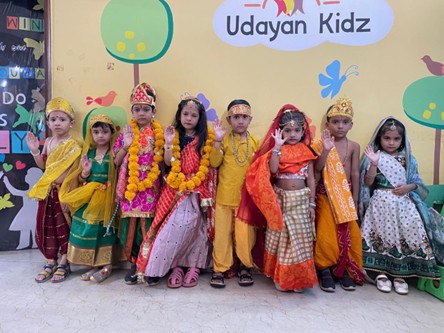
How did Udayan kidz Celebrated?
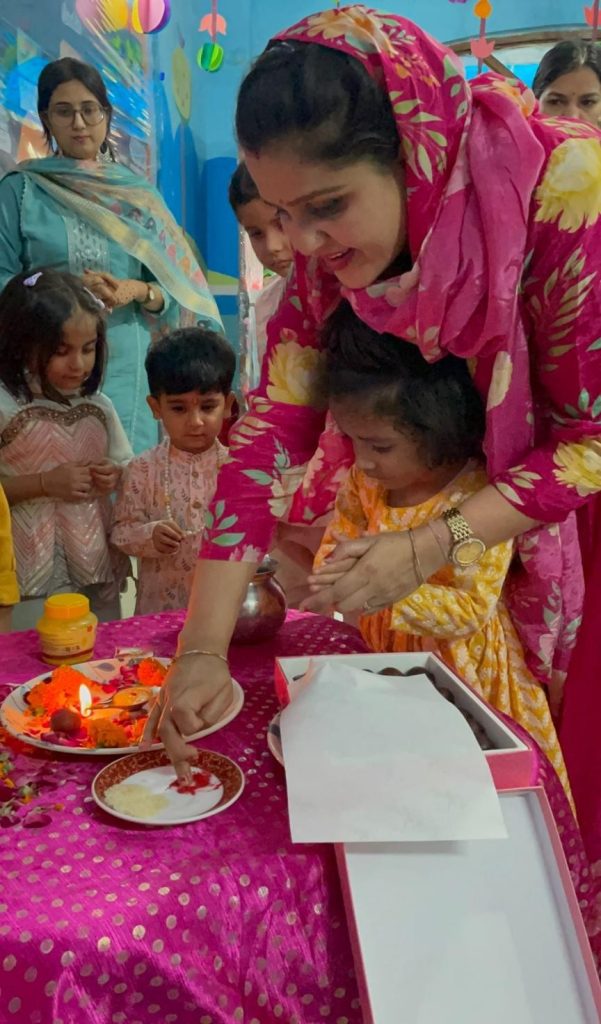
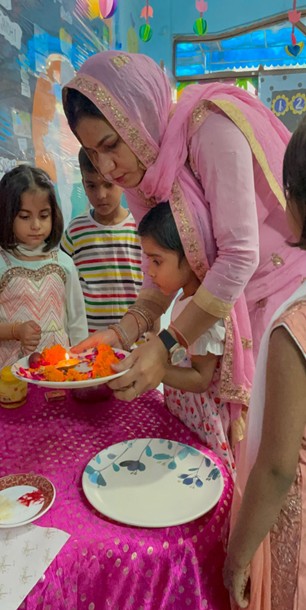
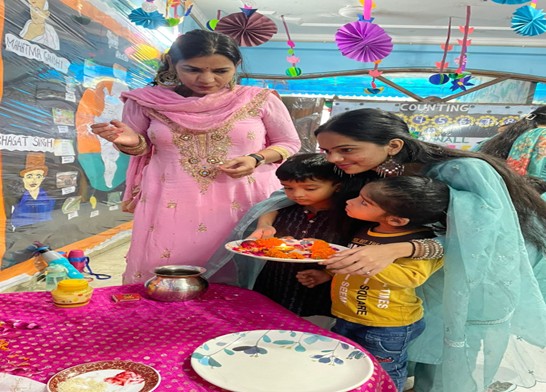
- Green Diwali Theme / Focus on Eco‑Consciousness: Udayan Kidz promotes a Green Diwali — celebrating joy without harming the environment. Instead of using loud or polluting fireworks, they encourage gentler, creative celebrations. Decorations and rangoli are made using recycled or natural materials (rather than plastics or materials that harm nature).
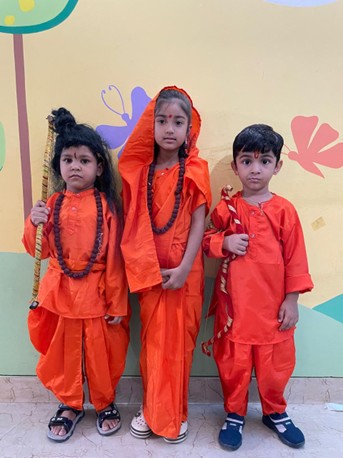
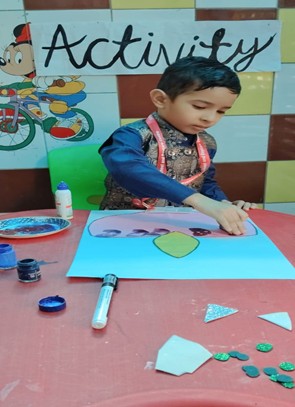
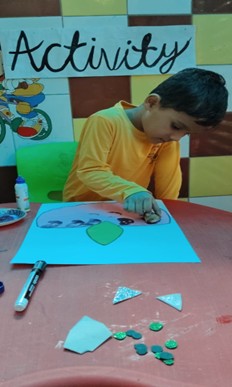
- Creative & Educational Activities: Storytelling sessions about Diwali, focusing on the story of Lord Rama, meaning of the festival, themes of good vs evil, etc. Rangoli workshops using upcycled / natural materials. Paper lanterns, diya crafting by children. They also use rhymes, Q&A, and songs adapted to children (“Sing for a pollution‑free Diwali”) to make learning interactive.